This glossary holds the words people can learn to understand the natural science programs.
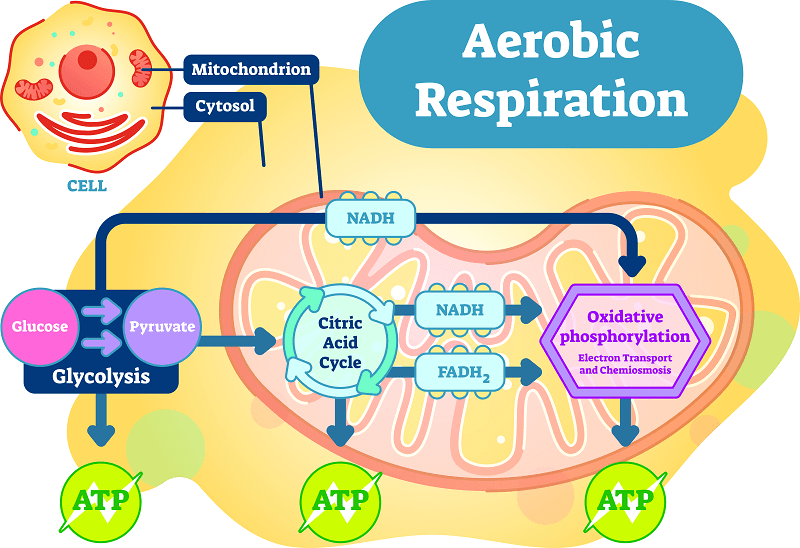
Aerobic
adjective
Living, active, or occurring only in the presence of oxygen.
Example: The theory suggests that a stable residence was established by aerobic bacteria inside the cytoplasm of a primitive eukaryotic-like cell, providing the cell with energy in return for a protected environment and an easily obtainable source of nutrients.
en: aéorobie
anastomosis
noun
A connection made surgically between adjacent blood vessels, parts of the intestine, or other channels of the body, or the operation in which this is constructed.
Example: This involved removal of the descending and sigmoid colon and was followed by the formation of an anastomosis to restore bowel function.
en: anastomose
anatomy
noun
The branch of science concerned with the bodily structure of humans, animals, and other living organisms, especially as revealed by dissection and the separation of parts.
Example: A number of reward-relevant sites along with the medial forebrain bundle, especially the ventral tegmental area are identified and their functional anatomy discussed.
en: anatomie
apoplexy
noun
Unconsciousness or incapacity resulting from a cerebral hemorrhage or stroke.
Example: Effective treatment of depression following apoplexy with citalopram.
en: apoplexie
biology
noun
The study of living organisms, divided into many specialized fields that cover their morphology, physiology, anatomy, behavior, origin, and distribution.
Example: In biology, the process is used in the analysis of messenger RNA, as well as the amplification of DNA fragments for analysis.
en: biologie
cell
noun
The smallest structural and functional unit of an organism, typically microscopic and consisting of cytoplasm and a nucleus enclosed in a membrane. Microscopic organisms typically consist of a single cell, which is either eukaryotic or prokaryotic.
Example: At its most simple level, the theory suggests that the modern Eukaryotic cell evolved from symbiotic associations with prokaryotic ancestors.
en: cellule
ecosystem
noun
A biological community of interacting organisms and their physical environment.
Example: Should the wrong gene "escape" into the environment, the ecosystem of the local area, and potentially that of the entire planet, could be irrevocably altered.
en: écosystème
gravity
noun
The force that attracts a body toward the center of the earth, or toward any other physical body having mass.
Example: This means that the string theory may provide the answer to the graviton and ultimately the holy grail of the Grand Unified Theory in which all forces (gravity, Electromagnetic, and the weak and strong nuclear forces) are linked together.
en: gravité
hypodermis
noun
The tissue immediately beneath the epidermis of a plant especially when modified to serve as a supporting and protecting layer.
Example: The hypodermis, containing blubber, is the thickest part of the skin and functions as a means to conserve heat.
en: hypodermie
Induration
noun
Hardening of an area of the body as a reaction to inflammation, hyperemia, or neoplastic infiltration.
Example: Erythema and scleroderma-like induration occur on the skin.
en: induration
ketonuria
noun
The excretion of abnormally large amounts of ketone bodies in the urine, characteristic of diabetes mellitus, starvation, or other medical conditions.
Example: The body is unable to store glucose and so turns to its emergency resources - fat and protein are broken down, a process resulting in ketones in the urine (ketonuria) and eventually acid in the blood (acidosis).
en: cétonurie
lithiasis
noun
The formation of stony concretions (calculi) in the body, most often in the gallbladder or urinary system.
Example: 30 patients diagnosed with biliary lithiasis underwent B ultrasonography and ERCP before the operation, 9 patients whose clinical symptoms remained after LC, ERCP was performed again.
en: lithiase
macroevolution
noun
Major evolutionary change. The term applies mainly to the evolution of whole taxonomic groups over long periods of time.
Example: Paleontology, evolutionary developmental biology, comparative genomics, and genomic phylostratigraphy contribute most of the evidence for the patterns and processes that can be classified as macroevolution.
en: macroevolution
mass
noun
A coherent, typically large body of matter with no definite shape.
"a mass of curly hair".
Example: The trajectory of the center of mass for a possible gait, inverted-pendulum walking, so-called because the trajectory of the hip follows that of an inverted pendulum.
en: masse
metatarsal
noun
Metatarsals are part of the bones of the mid-foot and are tubular in shape. They are named by numbers and start from the medial side outward. The medial side is the same side as the big toe.
Example: No tenderness was palpable over the fifth metatarsal, proximal fibula, or the knee joint suggesting that there are no concomitant injuries at these points.
en: metatarsien
muscle
noun
A band or bundle of fibrous tissue in a human or animal body that has the ability to contract, producing movement in or maintaining the position of parts of the body.
Example: Calcium is important for the proper growth of bones and teeth, normal blood coagulation, and muscle and nerve function.
en: muscle
organ
noun
In biology, an organ (from the Latin "organum" meaning an instrument or tool) is a collection of tissues that structurally form a functional unit specialized to perform a particular function. Your heart, kidneys, and lungs are examples of organs.
Example: Hypovolaemia and its associated reduced circulatory function can cause inadequate tissue perfusion resulting in ischemia, necrosis, and eventually organ failure (O'Neill, 2003).
en: organe
physics
noun
The branch of science concerned with the nature and properties of matter and energy. The subject matter of physics, distinguished from that of chemistry and biology, includes mechanics, heat, light and other radiation, sound, electricity, magnetism, and the structure of atoms.
Example: Concepts in physics Ph1001 In 1913 Niels Bohr released his initial model of the atom, as time has passed numerous flaws have arisen in this model.
en: physique
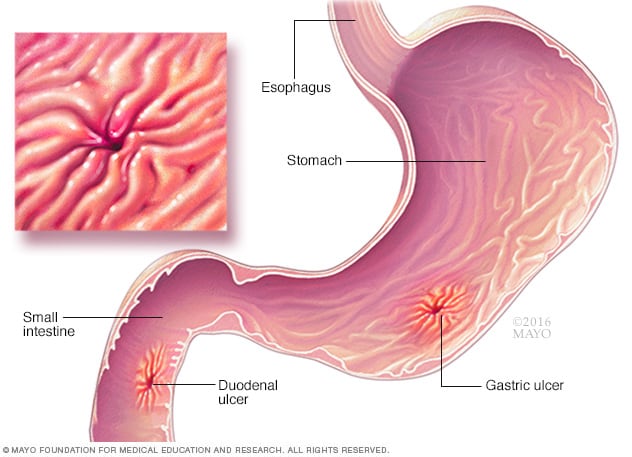
ulcer
noun
An open sore on an external or internal surface of the body, caused by a break in the skin or mucous membrane that fails to heal.
Example: Glandular tularemia produces similar symptoms but no ulcer forms at the inoculation site.
en: ulcère
virus
noun
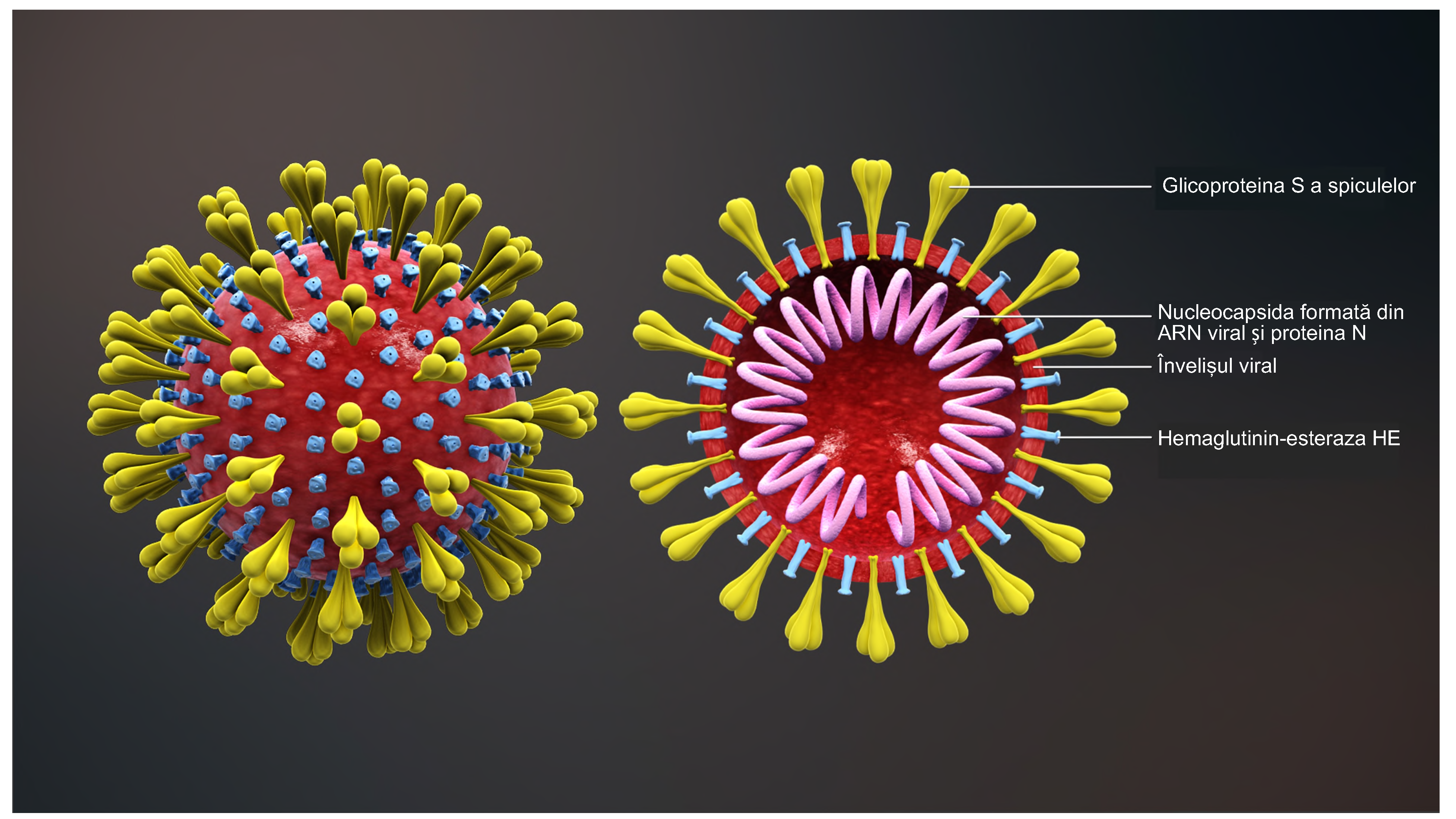
An infective agent that typically consists of a nucleic acid molecule in a protein coat, is too small to be seen by light microscopy and is able to multiply only within the living cells of a host.
Example: Antiretroviral treatment can slow the virus's progress in the body, and so early diagnosis of the disease can considerably increase the quality of life the patient has left.
en: virus
volemic
adjective
Of, relating to, or concerned with the volume of circulating blood or plasma.